

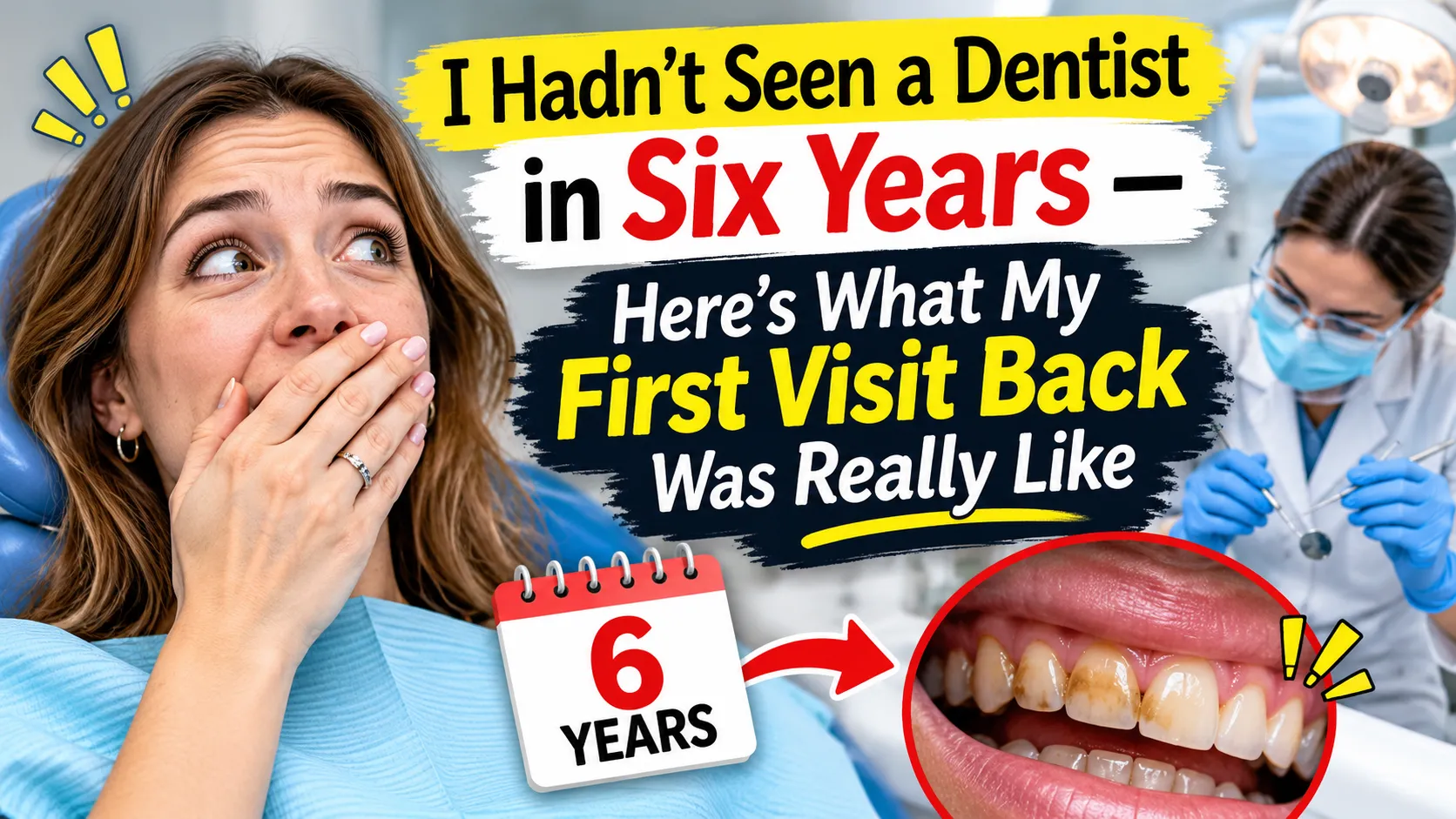
Six years is a long time to avoid a waiting room. Mine started with a lost job, then lost insurance, then a quiet decision to just… not. No injury forced the gap. No single bad experience caused it. It just happened, the way most dental avoidance happens — slowly, then all at once you realize you can’t remember your last cleaning.
The Six-Year Gap: How Avoidance Compounds
I’m a warehouse supervisor outside Rockland County, 41 years old, and my dental coverage disappeared the same month I switched employers. That was 2019. I told myself I’d pick a new practice once things settled. They never did. By year three, I’d stopped noticing the gap. By year five, I’d typed best dentist Suffern into Google at 11 p.m., then closed the tab.
What stopped me wasn’t cost. It was the assumption that walking back in meant walking into judgment. I pictured a lecture before a single tool touched my mouth.
Avoidance compounds quietly:
-
Minor sensitivity becomes background noise you stop reporting to yourself
-
Gum bleeding during brushing gets normalized as “just how my mouth is”
-
Small cavities grow under enamel with zero visible symptoms until they’re not small
None of that registers as urgent. That’s the trap. Nothing hurts enough to force the call, so the call never happens.
What the X-Rays Actually Showed
The intake process took longer than I expected — full-mouth X-rays, a periodontal chart, a conversation about every medication I’d started since my last visit. I’d assumed a six-year gap meant “needs a cleaning.” The dentist checked the spaces around my back teeth and found them to be 4 to 5 millimeters deep. This is a sign of early gum disease of just regular plaque. Also there were two fillings that had new decay under them. You couldn’t see the decay, from the outside.
That distinction matters more than it sounds. Cleaning focuses on surface buildup. Periodontal involvement requires a protocol entirely. Scaling below the gumline is often done in stages not in one visit where everything is polished and finished. The dentist explained that calculus had hardened in areas that a toothbrush simply cannot reach, after years of buildup.
Three things surprised me about the findings:
-
No pain had accompanied any of it — periodontal disease rarely announces itself early
-
One “small” cavity from years back had progressed close to the nerve
-
My bite had shifted slightly from a molar I’d been unconsciously favoring
The X-rays weren’t a scare tactic. They were documentation of six years of decisions I hadn’t realized I was making.
Why the First Appointment Isn’t One Appointment
This is the part nobody explains beforehand. Patients returning after long gaps don’t get one visit — they get a sequence. Practices around Rockland handle re-entry cases through a diagnostic visit first, then a scaling phase split across two sessions to manage inflammation and sensitivity, then restorative work for anything structural.
Searches for the best dentist Suffern residents recommend spike every January, right after holiday stress and New Year resolutions collide. Most of those searchers assume one appointment solves everything. It rarely does, once periodontal depth and old restorations are both in play.
The scheduling logic makes sense once someone walks you through it:
-
Deep scaling in one sitting on inflamed gums causes unnecessary discomfort and swelling
-
Splitting quadrants across visits lets tissue heal between sessions
-
Insurance pre-authorization for periodontal codes often requires documented pocket depths first
I went in expecting an hour. I left with a four-visit plan spread across six weeks. That reframe — from “appointment” to “phase” — removed most of my remaining anxiety, because suddenly nothing felt like an ambush.
Rebuilding the Habit Without the Guilt Spiral
The hardest part wasn’t clinical. It was psychological. I kept waiting for someone to ask why I’d waited so long, and no one did. The hygienist mentioned, almost in passing, that gaps of three to seven years are common among working adults who lose coverage or move. That single sentence did more to lower my guard than any reassurance script could have.
Rebuilding the habit took structure, not willpower:
-
Text reminders scheduled automatically at the six-month mark, not left to memory
-
A recall system flagging my file for a shorter follow-up interval given the periodontal history
-
Short, segmented cleanings rather than one long session, since anxiety spikes with duration
What actually stuck wasn’t a motivational talk. It was a system designed around the fact that I’d fall off again if the only mechanism was self-discipline. Practices that build recall infrastructure around lapsed patients, rather than relying on guilt, see better follow-through. I’m three cleanings in now. No gap since.
Where Local Practices Like Promise Family Dental Fit In
Practices built around preventive consistency — not just emergency intervention — tend to handle re-entry cases like mine with less friction. Promise Family Dental, operating in the Suffern area, structures initial visits around full diagnostic review before jumping into treatment, a sequence that mirrors what helped me most: understanding the full picture before deciding what happens next. That’s the model worth looking for regardless of which practice you choose, among the options patients weigh when searching for the best dentist Suffern has available for anxious or lapsed patients.
FAQs
How long is too long between dental visits?
Anything beyond two years increases risk of undetected periodontal changes. Six years, like mine, typically means a full diagnostic workup rather than a routine cleaning.
Will it hurt if I haven’t been in years?
Discomfort is possible during initial scaling on inflamed gums, but practices split treatment across sessions specifically to limit this. Communicate anxiety upfront — pacing changes the experience significantly.
How do I find the best dentist Suffern offers for anxious, lapsed patients?
Look for practices mentioning staged treatment plans and recall systems in their own descriptions, not just general cleanings. That language signals experience with re-entry cases specifically.
Do I need X-rays even if nothing hurts?
Yes. Periodontal disease and under-filling decay rarely cause pain in early stages. X-rays catch what symptoms miss, which is exactly what happened in my case.