

Why Is a Holter Monitor Test Recommended?
Heart-related symptoms do not always occur during a medical check-up. A person may experience a racing heartbeat, dizziness, or an unusual fluttering sensation in the chest, yet their routine electrocardiogram (ECG) results may appear normal. In such situations, a doctor may recommend a Holter monitor test to record the heart’s electrical activity over a longer period and investigate possible rhythm abnormalities.
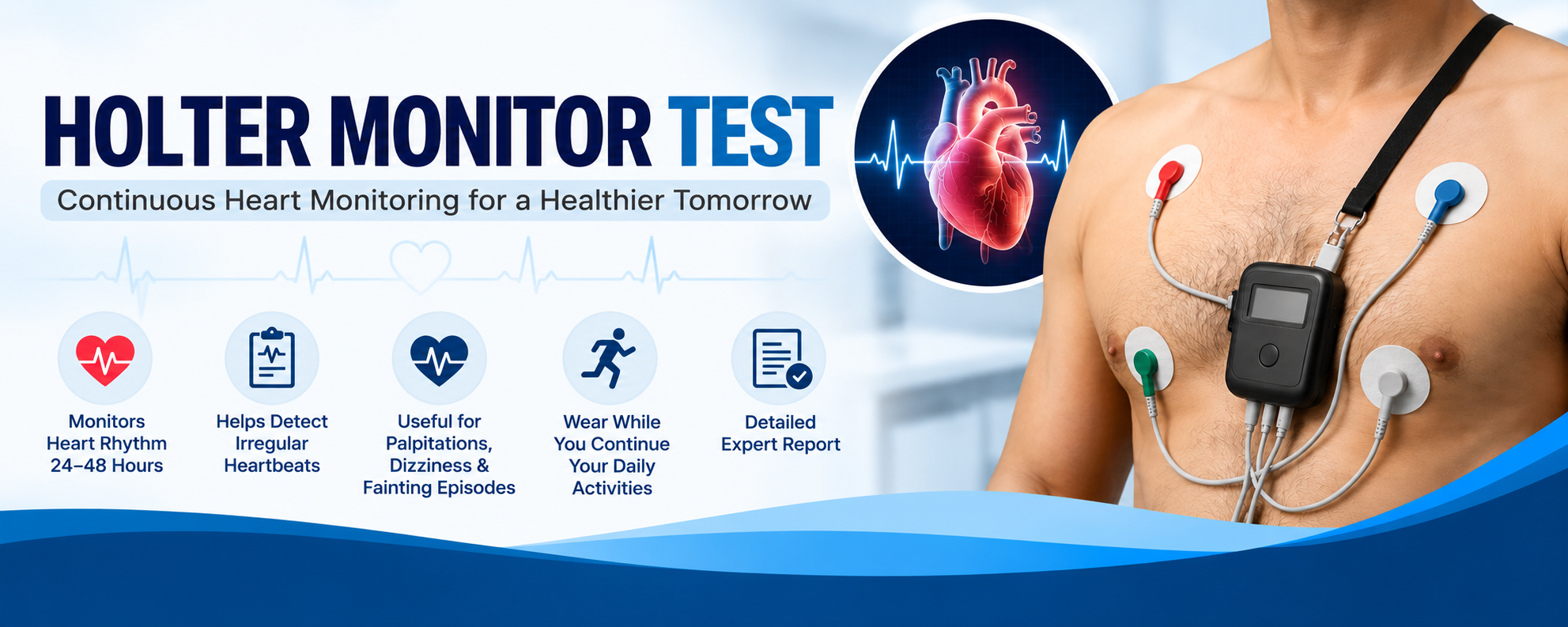
A Holter monitor is a small, portable device that continuously records the heart’s rhythm, commonly for 24 to 48 hours. Unlike a standard ECG, which captures heart activity for a brief period, this test helps doctors observe how the heart behaves during everyday activities, rest, and sleep.
Patients searching for a Holter test in Delhi may want to understand why this investigation is recommended, how it works, and what to expect before booking an appointment. Understanding the procedure and the factors affecting the Holter monitor test cost can also help patients make informed decisions about their cardiac evaluation.
What Is a Holter Monitor Test?
A Holter monitor test is a non-invasive cardiac investigation used to record the heart’s electrical activity continuously over an extended period. It involves attaching small adhesive electrodes to the chest and connecting them to a portable recording device.
The monitor collects information about the heart’s rhythm while the patient continues their usual daily activities. Once the monitoring period is complete, the recorded data is analysed by qualified healthcare professionals and interpreted alongside the patient’s symptoms and medical history.
Doctors may recommend this test when symptoms occur intermittently and are difficult to capture during a routine ECG.
7 Reasons Why a Holter Monitor Test Is Recommended
1. To Investigate Irregular Heartbeats
One of the most common reasons for recommending Holter monitoring is to investigate an irregular heartbeat, also known as an arrhythmia.
The heart normally follows a coordinated electrical rhythm. However, disturbances in its electrical signals can cause the heartbeat to become too fast, too slow, or irregular.
Some rhythm abnormalities occur only occasionally. A standard ECG may not detect them if they are absent during the examination.
A Holter monitor records heart activity continuously, helping doctors identify certain rhythm disturbances and determine whether additional evaluation or treatment is required.
2. To Evaluate Heart Palpitations
Heart palpitations are sensations in which a person becomes unusually aware of their heartbeat. They may feel as though the heart is racing, pounding, fluttering, or skipping a beat.
Palpitations can occur because of stress, caffeine, certain medications, or other factors. In some cases, they may be associated with an underlying heart rhythm disorder.
A doctor may recommend a Holter monitor test if palpitations occur repeatedly but are not captured during a routine ECG.
Patients may also be asked to maintain a symptom diary, noting when the palpitations occur and what they were doing at the time. Comparing these details with the recording can help doctors assess whether the symptoms coincide with a rhythm abnormality.
3. To Investigate Unexplained Dizziness or Fainting
Dizziness and fainting can have several causes, including dehydration, low blood pressure, medication effects, and certain heart rhythm problems.
If a doctor suspects that an intermittent rhythm disturbance may be responsible, Holter monitoring may be recommended to record the heart’s electrical activity over time.
The test can help identify certain rhythm changes that may occur around reported episodes. However, a normal Holter recording does not exclude every possible cause of dizziness or fainting.
People experiencing repeated or unexplained episodes should seek medical assessment to determine which investigations are appropriate.
4. To Detect Episodes of a Fast or Slow Heartbeat
A Holter monitor can help doctors investigate episodes of tachycardia, which refers to an abnormally fast heart rate, and bradycardia, which refers to an unusually slow heart rate.
Some people experience these changes only during particular activities or at specific times of the day. Others may notice symptoms such as weakness, light-headedness, breathlessness, or palpitations.
Continuous monitoring provides a longer recording than a standard ECG and may help identify these intermittent changes.
The significance of any abnormal finding depends on the person’s symptoms, medical history, medications, and overall clinical condition.
5. To Monitor the Effect of Heart Treatment
Doctors may recommend Holter monitoring to assess heart rhythm after starting or adjusting certain medications or following treatment for a rhythm disorder.
The recording may help evaluate whether an arrhythmia continues to occur or whether treatment is associated with changes in heart rate or rhythm.
The results provide additional information that a doctor can use when reviewing the treatment plan. A Holter test does not replace regular medical follow-up, and medication should never be changed without professional guidance.
6. To Identify Rhythm Changes During Sleep and Daily Activities
Heart rhythm can vary throughout the day in response to physical activity, rest, sleep, stress, and other factors.
Because a Holter monitor records heart activity over an extended period, it can help doctors examine rhythm patterns during different parts of a person’s routine.
Patients are generally encouraged to continue their usual activities unless their doctor advises otherwise. They may be asked to record exercise, sleep times, symptoms, and other relevant events.
This information can help the interpreting clinician understand the recording in context.
7. To Investigate Symptoms When a Routine ECG Is Normal
A routine ECG is an important first-line investigation for assessing the heart’s electrical activity. However, it records only a short period of heart activity.
If a patient experiences occasional palpitations or other symptoms despite a normal ECG, the doctor may recommend longer monitoring.
A Holter monitor can capture certain intermittent rhythm abnormalities that are not present during a brief ECG recording.
If symptoms occur less frequently than once every day or two, a longer-term event monitor or another ambulatory cardiac monitoring device may be more suitable. The choice depends on the frequency of symptoms and the doctor’s clinical assessment.
How Is a Holter Monitor Test Performed?
The procedure is generally simple and does not require surgery or hospital admission.
Step 1: Electrode placement
A healthcare professional attaches small adhesive electrodes to the patient’s chest. These electrodes connect to the portable recording device.
Step 2: Device setup
The monitor is secured using a strap, belt, or pouch. The patient receives instructions about wearing the device, keeping the electrodes attached, and recording symptoms.
Step 3: Continuous monitoring
The patient wears the device for the prescribed duration, commonly 24 to 48 hours. Normal daily activities can usually continue, subject to medical advice and device-specific precautions.
Step 4: Device return
At the end of the monitoring period, the patient follows the diagnostic centre’s instructions for removing or returning the equipment.
Step 5: Recording analysis
The recorded information is analysed and reviewed by qualified healthcare professionals. The doctor interprets the results alongside symptoms, medical history, and other relevant investigations.
How Should You Prepare for a Holter Monitor Test?
Most patients do not need extensive preparation. However, a few practical steps can make the monitoring process easier.
-
Wear comfortable clothing that allows access to the chest for electrode placement.
-
Keep the chest clean and avoid applying creams or oils before the appointment.
-
Continue prescribed medications unless your doctor gives different instructions.
-
Follow the device-specific instructions about bathing and keeping the monitor dry.
-
Avoid removing electrodes or adjusting the device without guidance.
-
Maintain a diary of symptoms, activities, and relevant medication timings if instructed.
Patients should inform the healthcare professional about adhesive allergies or skin sensitivities before the electrodes are applied.
What Factors Affect the Holter Monitor Test Cost?
The Holter monitor test cost can vary between diagnostic centres depending on the type of monitor, monitoring duration, reporting arrangements, and services included in the test package.
Before booking a test, patients should confirm:
-
Whether the test involves 24-hour, 48-hour, or longer monitoring.
-
Whether device setup and data analysis are included.
-
Whether the final report is included in the quoted price.
-
How long the report will take to prepare.
-
Whether a doctor’s consultation is charged separately.
If you are comparing the Holter monitor test cost at different centres, consider the monitoring process, reporting arrangements, and availability of qualified healthcare professionals alongside the price.
Patients looking for a Holter test in Delhi should contact their preferred diagnostic centre to confirm current pricing, appointment availability, and the appropriate monitoring duration recommended by their doctor.
Is a Holter Monitor Test Painful?
A Holter monitor test is generally painless and non-invasive. It does not use ionising radiation and does not involve injections or surgical procedures.
Some people may experience mild skin irritation from the adhesive electrodes. The monitor may also feel unfamiliar at first, but most patients can continue their usual routine while wearing it.
The device must remain properly connected throughout the monitoring period to help obtain a useful recording.
What Can a Holter Monitor Test Detect?
Depending on the recording, a Holter monitor may help identify:
-
Certain episodes of atrial fibrillation.
-
Abnormally fast or slow heart rhythms.
-
Premature or extra heartbeats.
-
Some pauses in the heart’s rhythm.
-
Rhythm changes associated with reported symptoms.
-
Changes in heart rhythm during sleep or physical activity.
A Holter monitor primarily evaluates electrical activity and heart rhythm. It does not directly show the heart’s structure or reliably diagnose blocked coronary arteries. Additional investigations may be necessary depending on the clinical findings.
Holter Monitor Test vs. ECG: Understanding the Difference
Both tests assess the heart’s electrical activity, but their recording periods and purposes differ.
|
Feature |
Standard ECG |
Holter monitor test |
|---|---|---|
|
Recording duration |
Usually a few seconds |
Commonly 24–48 hours |
|
Equipment |
ECG machine |
Portable recording device |
|
Monitoring environment |
Usually during a brief clinical appointment |
During normal daily activities |
|
Main purpose |
Assess heart activity at the time of testing |
Investigate intermittent rhythm abnormalities |
|
Best use |
Initial assessment of cardiac electrical activity |
Longer-term recording when symptoms may come and go |
Neither test is universally better. A doctor chooses the appropriate investigation based on the symptoms, clinical history, and suspected condition.
When Should You Consult a Doctor About Heart Rhythm Symptoms?
Consider seeking medical advice if you experience recurring palpitations, unexplained dizziness, intermittent light-headedness, or fainting episodes. A doctor can assess your symptoms and decide whether a routine ECG, Holter monitor test, or longer-term monitoring is appropriate.
Seek urgent medical attention if you experience chest pain, severe breathlessness, fainting with ongoing symptoms, or a rapid or irregular heartbeat accompanied by severe weakness or dizziness. Do not wait for a scheduled diagnostic test if symptoms may indicate a medical emergency.
Conclusion
A Holter monitor test is recommended when doctors need to evaluate heart rhythm over a longer period than a standard ECG allows. It can help investigate irregular heartbeats, palpitations, unexplained dizziness, fainting episodes, and possible rhythm abnormalities that occur intermittently.
For patients considering a Holter test in Delhi, understanding the procedure, preparation, and factors affecting the Holter monitor test cost can make the booking process easier. The most appropriate test and monitoring duration should always be determined according to the patient’s symptoms and the doctor’s advice.
If your doctor recommends a Holter monitor test, follow the preparation instructions carefully and maintain an accurate symptom diary when advised. Timely medical evaluation can help determine the cause of symptoms and guide appropriate follow-up care.
Frequently Asked Questions
1. Why do doctors recommend a Holter monitor test?
Doctors commonly recommend it to investigate irregular heartbeats, palpitations, unexplained dizziness, fainting episodes, or suspected arrhythmias that may not appear during a routine ECG.
2. How long do you need to wear a Holter monitor?
The device is commonly worn for 24 or 48 hours. Longer monitoring may be recommended when symptoms occur less frequently.
3. What is the Holter monitor test cost?
The cost varies according to monitoring duration, equipment, reporting arrangements, and the diagnostic centre. Contact the centre directly for current pricing and confirm which services are included.
4. Can a Holter monitor detect an irregular heartbeat?
Yes. It can record certain irregular heart rhythms, including episodes of atrial fibrillation and premature heartbeats, depending on the recording and the nature of the abnormality.
5. Can I sleep while wearing a Holter monitor?
Yes. Patients generally sleep while wearing the monitor. Follow the instructions provided to protect the device and keep the electrodes securely attached.
6. Can a Holter monitor test detect heart blockage?
No. A Holter monitor primarily records electrical activity and is not a reliable test for diagnosing or excluding blocked coronary arteries. Other investigations may be required.
7. What happens if the Holter monitor test result is normal?
A normal result means that no significant abnormality was identified in the recording. However, an intermittent problem may not occur during the monitoring period, so further assessment or longer monitoring may be needed if symptoms continue.
8. Is a Holter monitor test safe?
Yes. It is generally considered safe, non-invasive, and painless. Mild irritation from the adhesive electrodes can occasionally occur.