

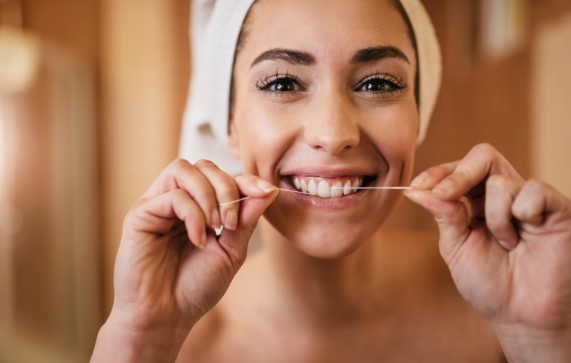
Using dental floss is a basic yet significant step in your daily oral hygiene routine as it helps in cleaning the areas where your toothbrush can’t reach. Here, the article describes different kinds of dental floss, the advantages of using dental floss, and also explains the correct method of using it very simply so that it can be understood by students and patients.
What is dental floss?
Dental floss is a piece of very thin thread that is used for cleaning spaces between teeth and even slightly below the gumline. Brushing only removes food and plaque from the exposed surfaces and grinding areas of the teeth, but it’s often a little blind in those tiny spaces between teeth. It’s exactly because of this that flossing is so critical to maintaining oral hygiene every day. The dentist in Red House Dental have stated that brushing cannot reach all the areas of the mouth while flossing can clean these parts efficiently.
Small crevices serve as excellent hiding places for food debris and plaque. If these areas are not clean, it is quite likely that foul breath, tooth decay, and plaque would be the consequences. Hence, flossing your teeth daily really does support keeping them clean and your gums healthy. It is a habit that may seem rather insignificant however if you do it consistently, it can have a great result.
Why flossing matter
Reasons why flossing is important Flossing can be a really effective way to get rid of any plaque that has built up in the little nooks and crannies between your teeth. This is important because it is one of the ways how tooth decay can be prevented and gum diseases are kept at bay.
To break it down, plaque is that little layer of germs that get stuck on your teeth after each meal or drink. Now if plaque is left on the teeth, particularly the areas in-between, it can harden and that is when it becomes really tough to remove them. That’s where flossing regularly comes to rescue to put an end to this problem before it even starts. Besides that, it helps to get rid of the bad breath by removing the food that gets stuck in between. Many think that brushing alone will do however the spaces that are even hard to our eyes still are neglected. Flossing is particularly fun if you love gooey sweet stuff or if your teeth even are close. It contributes to healthier gums as well as a sparkling smile.
Types of dental floss
There isn’t one good floss for everyone. What is best really depends on your teeth, gums and comfort. Various dental floss types have been made for different needs, and learning about the options can help you choose wisely.
Waxed floss
Thanks to a thin coating, waxed floss glides between teeth with fewer problems. It is a good option for tightly packed teeth. Many others choose it because it feels smoother and it’s harder for it to snap. Waxed floss may feel a bit heavier however for new users, it is usually more manageable.
Unwaxed floss.
This type of floss is even thinner and it is also not coated. It can slide into really tight spots very well, but it tends to be more prone to fraying than waxed floss. Some people really appreciate its fresh effect, whereas others see it as less robust. It comes in handy if your teeth are very close to each other.
Dental tape
Compared to regular floss, dental tape is a lot wider and flatter. It might have a more pleasant feel to those who have larger gaps between their teeth. Its design allows it to cover the tooth surface more. A lot of users consider it less abrasive and quite manageable.
PTFE Floss
PTFE floss is a kind of floss that is ultra smooth and so it slides easily even through very tight gaps in your teeth. Typically up for selection are people that have very tender gums because it can be moved more quickly and they say it feels quite soft. If you are experiencing difficulty with regular floss, as if it feels rough or hard to operate, then this type can be exactly what you need. Besides, it is hardly ever getting caught in the most narrow spaces.
Floss Picks
Floss picks come with a tiny handle in which a short segment of floss is fixed. Those, who are not good at handling string floss, can easily get helped by these devices. Floss picks are pretty straightforward, fast, and you can easily keep them in your bag or pocket. On the other hand, for some users, these might not provide as much control as the regular floss.
Orthodontic floss tools
Those who own braces, bridges, or other types of fixed dental restorations might require particular pieces of equipment such as floss threaders and orthodontic floss. They assist floss to easily pass underneath wires and around appliances. These allow for the cleaning of areas which are normally inaccessible by regular floss. It is quite crucial to note that braces can hold up a significant amount of food and plaque here.
Benefits of dental floss
One of the major benefits of dental floss is that it cleans the parts a toothbrush cannot reach. Consequently, it decreases the growth of bacteria and greatly improves overall oral health. One of the major reasons why dentists recommend daily flossing is that regular removal of plaque reduces the risk of tooth decay.
Besides this, flossing is a perfect way to care for the gums. If plaque is not removed from the gumline, it can lead to gum irritation, which is followed by inflammation and bleeding of the gums. Regular flossing helps to remove such a source of irritation and also makes the gums stronger. Generally, people who have healthier gums also smell fresher and they enjoy the feeling after brushing more. Moreover, flossing helps with your dental health in the long run. Preventing is always much cheaper than curing. Those few minutes of daily flossing might spare you from a delayed procedure, some discomfort and a considerable amount of money. This is the reason why dental floss is frequently referred to as a small habit yielding the biggest rewards.
How to use dental floss
Using dental floss correctly is equally important as flossing daily. The intention is to gently clean each tooth without causing damage to the gums.
A thorough procedure is more effective than applying brute force or moving too fast. Get 18 inches of floss roughly.
Most of it should be rolled around the middle fingers of both hands. Keep only a small piece available to use.
Pinch the floss firmly with your thumb and finger. Wiggle it slowly between two teeth.
Form the floss into a C-shape around one tooth. Work the floss up and down on the tooth and a little bit under the gumline.
Do the same to the next tooth and keep on flossing. Fresh piece of floss is what you should use when going from one tooth to another. This will help prevent the spreading of bacteria and keep the cleaning operations effective. Do not be harsh since snapping floss into the gums might cause pain or bleeding. If the floss seems too tight, work with it slowly and conscientiously instead of breaking it forcefully.
Common mistakes
One of the most frequent errors individuals commit is discontinuing flossing the moment their gums begin to bleed for the very first time. Minor bleeding is to be expected when the gums are not yet accustomed to flossing; however, with regular flossing, it generally becomes more comfortable and involves less bleeding within a few days.
Another error is being very rough with the floss. If you yanked the floss really hard, it could not only be hurt the gums, but also make the whole flossing experience so unpleasant that you would make excuses not to do it. Some people also only floss the front teeth and forget the back teeth. As a result, the plaque in the areas where the problems are more prone to occurrence, staying on. Similarly, some in fact continue using the same tiny, dirty piece of floss for the whole mouth. So, if you desire a cleaner and more hygienic mouth, a section of floss that is clean is the best. The main thing is to be soft, accurate and make it a usual habit.
Choosing the right dental floss
The best dental floss is that which you will be able to use regularly every day.
If your teeth are very close together, waxed or PTFE floss might be your best option. On the contrary, dental tape will be more to your liking if there are large gaps between your teeth. If you are using braces or bridges, you may find special floss tools are the easiest option for you.
One of the main reasons why people are more inclined to maintain a habit is if they don’t dislike the habit. If one type feels weird, it is perfectly okay to try others. Not looking for the most expensive product, but the one which suits your mouth and schedule. If you aren’t sure which one is for you, a dental professional can also help you.
Tips for daily use
The best time to floss would be once a day, if possible before going to sleep. This prevents food and plaque staying on your teeth overnight. It’s a great idea to keep your floss somewhere you can easily see it, for example, next to your toothbrush. Small hints can really work in forming a habit.
If traditional floss is hard for you, do not rush, start little by little and floss in front of the mirror. It’s absolutely fine if you are not doing perfectly. As with brushing, flossing will get easier eventually. The most important thing is to not give up and do it every day.
Conclusion
It’s well-known that dental floss is among the easiest oral care tools you can use yet it sadly happens to be the one thing that most people manage to overlook. Besides being an ideal way to remove plaque from inaccessible areas, flossing also keeps the gums healthy, stops the development of cavities, and contributes to an overall cleaner mouth. By selecting the right type of floss and getting the technique right, anyone could make flossing a part of their routine for a healthy lifestyle. Besides, the dental practice of Red House dental has pointed out that brushing only takes care of the visible parts of your mouth; on the other hand, dental floss reaches the hidden areas.